-
+86 130 5853 2903
+86 130 5853 2903
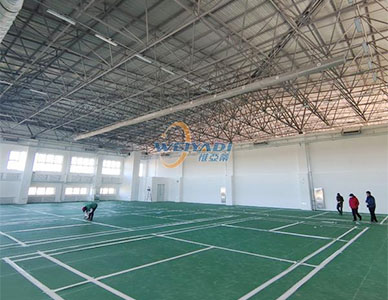
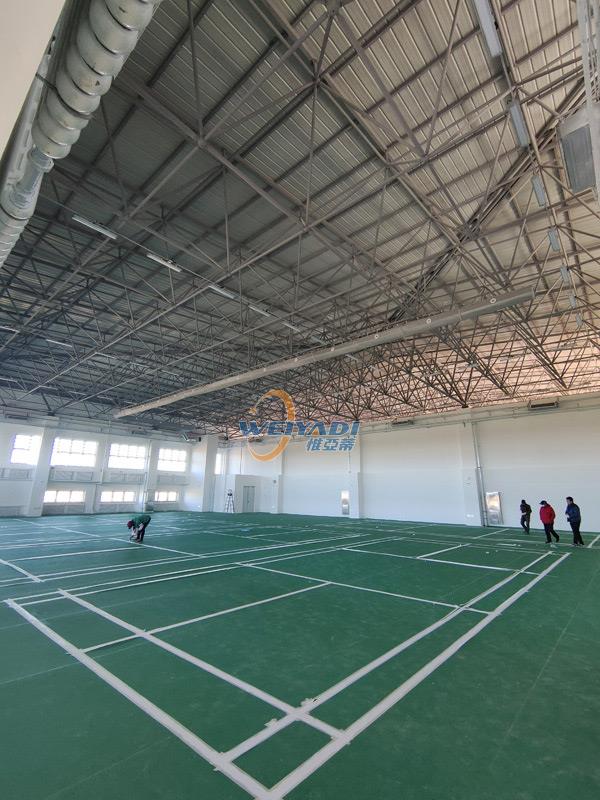
Semiconductor chips emit light without filaments or glass bulbs, are resistant to vibration, and not easily broken. They have a service life of up to 50,000 hours, with extremely low overall cost, saving resources and reducing costs, bringing good economic benefits. LED light is soft, free of environmental pollution, contains no harmful metallic mercury, has no flicker, no radiation, and no ultraviolet or infrared light, offering saturated static and dynamic lighting effects.
Badminton Court Lighting Layout Diagram
A badminton court is a rectangular area 13.40 meters long, 6.10 meters wide for doubles, and 5.18 meters wide for singles. The diagonal length of a doubles court is 14.723 meters, and that of a singles court is 14.366 meters. The court is divided in half by a net (the posts on both sides are 1.55 meters high, and the net height in the middle is 1.524 meters).
Requirements for Badminton Court Lighting Layout
Whether a court is professional depends not only on the surface but also on the lighting. A good court will attract more sports enthusiasts to enjoy their games. Therefore, the selection and layout of lighting are particularly important!
According to international competition regulations, the minimum clearance above the entire court is 9 meters. Within this height, no beams or other obstacles are allowed. There must be no obstacles within 2 meters around the court. Any two adjacent courts must have a minimum distance of 2 meters between them. Therefore, for professional-level venues, the installation height of badminton court light fixtures should be at least 9 meters above the ground, and they should be equipped with anti-glare devices. For recreational and training-level venues, the installation height can be appropriately reduced.
Today we will discuss what lights should be used in a badminton court, what the standards are for professional badminton court lights, and how to choose badminton court lighting.
For most gymnasiums, electricity costs have always been a difficult expense to control. Implementing LED lighting energy-saving renovations can reduce lighting-related expenses, directly improve cash flow, lower overall operating costs, increase current profits, enhance cost advantages and market competitiveness, and achieve sustainable and healthy development.
For sports venues with high fixture installation heights, light sources such as high-bay fluorescent lamps, high-efficiency LED floodlights, and metal halide lamps are recommended.
Badminton Court Lighting Layout Plan
Here I am using LED linear lights with a total luminous flux of 10,802 lm, a color rendering index of 90, and a power of 140W. Of course, you can also use T5/T8 light panels or metal halide high bay lights.
Features of professional court floodlights: lightweight fixtures with easy-to-carry handles, 360° adjustable mounting brackets, precision aiming accessories mounted on the top or bottom of the fixture body, and adaptability to normal indoor and outdoor weather conditions. Through continuous improvement, the luminous efficiency and effective utilization of light have been greatly enhanced. This series of fixtures is specially designed for sports field lighting, allowing athletes, spectators, and television viewers to better participate in and experience the excitement of the game. The unique elliptical optical system combined with new light sources ensures high overall efficiency, high reliability, low glare, and optimal lighting levels, with a compact and attractive appearance, low wind resistance, and light weight. The fixtures feature uniquely designed light distribution curves, precise beams, multiple light distribution options, and instant start-up.
How many lights are needed for indoor badminton court lighting? To create an efficient and comfortable visual environment, a good badminton court lighting design requires a unified consideration of both fixture selection and lighting design.
100W fixtures can range from 100 yuan to 2,000 yuan. As a consumer, you need to look carefully. Like many products, differences in production processes and component materials directly lead to varying price levels. For example, regarding chips, some may claim to use a certain imported brand, but upon closer inspection, there are differences between 3030 and 5050 types.
Badminton hall lighting usually takes three forms: natural lighting, artificial lighting, and a combination of both. Most modern badminton halls use mixed lighting, with artificial lighting serving as general illumination. In the design of a badminton hall, to enable athletes to accurately judge the trajectory, height, and landing point of the shuttlecock, natural light should be utilized to the greatest extent first, as its effect is best. Of course, glare must be prevented, and excessively strong light should not shine directly or reflect into the eyes. Secondly, the stability and uniformity of illuminance should be enhanced. This is important not only for athletes to achieve excellent results, but also for referees' accurate judgments and spectators' enjoyment.
Badminton Court Lighting
The comment function has been enabled below. Everyone is welcome to leave comments and suggestions and share your thoughts with us. We will incorporate them into the article. Heart emoji.
The shuttlecock is white, and the background wall is also white, which can make it difficult for players to see the shuttlecock's trajectory. To increase the color contrast between the shuttlecock and the background wall, the light and shadow effects of the lamps can be used to reduce the brightness of the background wall. An opaque lampshade can be used to cast shadows onto the wall, while another portion of the light shines onto the floor and is reflected into the court, thereby reducing the brightness of the background wall and increasing the contrast between the shuttlecock and the background, making the shuttlecock's movement clearer visually.
Features of high-efficiency floodlight LED court fixtures: The patented "fin-type" heat dissipation structure provides a larger heat dissipation area and better thermal conductivity, effectively reducing LED junction temperature rise, resulting in lower luminous flux degradation and longer service life. At the same time, the product is lighter and has extremely high safety performance, making it a unique high-tech LED fixture on the market. Using a unique asymmetric light-emitting lens, light is effectively and uniformly projected onto the surface of objects, avoiding light loss, greatly improving light utilization and surface brightness, making it an ideal lighting fixture for various indoor and outdoor venues.
A badminton court is divided horizontally by the center line into left and right halves. Vertically, it is divided into the front court, mid court, and back court. The front court is the area between the front service line and the net; the back court is the area between the end line and the doubles back service line; and the mid court is the area between the front service line and the doubles back service line.
The typical lighting layout for badminton courts places fixtures on both sides of the court rather than directly above it, to prevent direct glare from interfering with athletes. When fixtures are arranged on the sides, glare is greatly reduced, and the requirements for the fixtures are less stringent.
Note: 1. When there are two values in the same cell in the table, the value before "/" is the value for the main playing area (PA), and the value after "/" is the value for the total playing area (TA).
Badminton Court Illuminance Standards
As one of the common lighting fixtures in badminton halls, the row light is a collection of a row of tubes, usually installed at a height of about 3-6 meters. The disadvantage of row lights is their extremely short lifespan, requiring frequent replacement. Moreover, if even one tube in a row light is damaged, the entire row light needs to be taken down and replaced, which is time-consuming and labor-intensive.
Features of high-bay fluorescent lamps and high-bay LED fixtures: Unique reflector design with efficiency up to 90-95%; more tube configuration options for flexible layout and light distribution, maximizing energy savings; paired with professional high-bay long-life fluorescent tubes, achieving higher lumen maintenance and longer life; high efficiency and energy saving, with energy savings of up to 50-60% compared to traditional HID fixtures. These fixtures outperform other types in comfort, illuminance, and glare control, providing customers with a professional and comfortable lighting environment. They are also suitable for indoor tennis court lighting, indoor basketball court lighting, badminton court lighting, and indoor multi-purpose venue lighting.
The fixture body is made of high-quality aviation aluminum profiles for better heat dissipation. It also uses phase-change heat dissipation technology and an air convection structural design to ensure heat dissipation performance. The light source uses imported high-quality high-power LED chips, which offer high brightness, light color that blends with the court, long lifespan, and softer light.
What does a badminton court with proper lighting design look like? Let's have expert Pingzi explain with examples (applause here).
Therefore, for professional-level venues, the installation height of badminton court light fixtures should be at least 9 meters above the ground, and they should be equipped with anti-glare devices. For recreational and training-level venues, the installation height can be appropriately reduced.
(4) Metal halide lamps should not use open-type fixtures. The protection rating of the fixture housing should not be less than IP55, and in locations that are difficult to maintain or heavily polluted, the protection rating should not be less than IP65.
Four badminton courts, total playing area (TA) dimensions: 19.4m × 10.1m; main playing area (PA) dimensions: 13.4m × 6.1m; indoor hall height is 8m.
The above is recreational lighting for a four-court badminton hall. The most important thing is the method. You can apply the same approach to other venues; it doesn't matter if the venue is different, as long as the method is correct, you can work it out.
Modern large-scale comprehensive gymnasiums must not only meet the requirements of various large-scale competitions, but also host different large-scale cultural performances, assemblies, and other tasks. The interior is divided into the main competition area and general competition areas, usually including badminton halls, table tennis halls, volleyball halls, tennis halls, basketball halls, track and field venues, and their supporting functional areas.
(3) The fixtures and accessories should meet the requirements of the operating environment. The fixtures should have high strength and corrosion resistance, and the electrical accessories must meet the heat resistance rating requirements.
Determining the installation position of gymnasium light fixtures is very important and serves as the basis for subsequent illuminance calculations. In general, most lighting fixtures in a gymnasium are installed on catwalks, so the lighting positions should usually be designed according to the catwalk positions.
For ordinary training courts, each court is equipped with 4 180W badminton court lights, achieving an average illuminance of 150-200 lux.
In addition to high-bay fluorescent lamps, for professional badminton venues with a height of more than 10 meters (catwalk installation), using professional court floodlights and high-efficiency floodlight LED court fixtures is also a good choice.
Low-grade appearance is the second drawback. Row lights are installed at a low position and are generally used in small or low-ceiling badminton halls. If the badminton hall is positioned as high-end and unique, row lights are not presentable, so it is difficult to see row lights in professional venues.
A standard badminton court is a rectangular area with dimensions of 13.40 meters in length and 6.10 meters in width. All lines on the court are 4 cm wide, and measurements should be taken from the outer edge of the lines. The court boundaries are best drawn in white, yellow, or other easily identifiable colors. According to international competition regulations, the minimum clearance above the entire court is 12 meters. The walls around the court should preferably be dark green, and there should be no wind.
With the improvement of people's living standards and quality of life, having a healthy body has attracted more and more attention. Social interaction, entertainment, and leisure make the public more willing to engage in fitness activities. Badminton has a low entry barrier and is easy to learn, making it more accessible to the general public.
Glare is another important factor in evaluating lighting quality. The generation of glare is related to the installation method, installation height, number and density of fixtures, and light distribution of the fixtures. When there is excessive brightness contrast in the field of vision, people feel dazzled, which affects visual acuity. For example, looking at the sun at noon on a sunny day makes it impossible to open your eyes; this is glare caused by excessive brightness. Glare in a badminton court is direct glare. Because the ceiling is low, the light source is very dazzling for athletes during movement (point light source), causing eye discomfort over time and seriously affecting their ability to observe the movement of the shuttlecock.
Therefore, the construction of indoor badminton halls is bound to usher in a boom, and as the focus of badminton halls, the standards for badminton court lighting are also getting higher and higher.
Lighting stability directly affects people's health. Unstable lighting can reduce athletes' vision. Lighting stability is mainly reflected in the stroboscopic effect. Stroboscopic effect is caused by the periodic changes in current when AC power is supplied, and the luminous flux also changes periodically, causing illusions when people observe moving objects. The periodic change in current causes instability in the light source, resulting in obvious stroboscopic effects in artificial lighting. When observing the movement of a shuttlecock, a blurred shadow with low resolution can be seen.
LED fixtures, while meeting high illuminance requirements, can also maintain low glare, without causing significant visual impact on athletes and referees. At the same time, high color rendering can meet the basic requirements of television broadcasting for various competitions.
In the past, traditional football fields generally used 1000W or 1500W metal halide lamps or floodlights. Due to shortcomings such as glare, high energy consumption, short lifespan, inconvenient installation, poor color rendering, and insufficient actual brightness, traditional fixtures can no longer meet the lighting requirements of modern sports venues.
In summary, for the selection of badminton court lighting fixtures, if the venue is large and the lighting requirements are high, the first choice is Wanye Sports Lighting's LED sports lighting fixtures and high-bay fluorescent lamps. PS: We are very professional!
Football lighting is divided into indoor football field lighting and outdoor football field lighting, and the installation methods differ depending on the venue. The standards should be determined according to the intended use of the football field, divided into seven levels: training and recreational activities 200 lx, amateur competitions 500 lx, professional competitions 750 lx, general TV broadcasting 1000 lx, large international competitions with HDTV broadcasting 1400 lx, and TV emergency 750 lx.
Football fields generally use high-pole lights or floodlights. The lights can be installed on the edge of the stand canopy or on poles installed around the field. The number and power of the lights are determined according to the lighting requirements of different fields.
For the eyes to distinguish an object from the background, one of two conditions must be met: either the background and the object have different colors, or there is a certain brightness contrast between them. If the object is brighter and the background is slightly darker, vision is better; conversely, if the background is brighter than the object, vision will significantly decline. When lighting conditions are poor, especially when there is a lack of brightness contrast, false visual phenomena may occur, distorting the perception of objects and adversely affecting the judgment of important information. The shuttlecock is white against a white background wall, which can cause players to have difficulty seeing the trajectory. To increase the color contrast between the shuttlecock and the background wall, the light and shadow effects of the lamps can be used to reduce the brightness of the background wall. An opaque lampshade can be used to cast shadows onto the wall, while another portion of the light shines onto the floor and is reflected into the court, thereby reducing the brightness of the background wall and increasing the contrast between the shuttlecock and the background, making the shuttlecock's movement clearer visually.
According to table tennis rules, in world and Olympic competitions, the illuminance measured from the height of the playing surface must not be less than 1000 lux, and the illuminance must be uniform across the entire playing surface. The illuminance in other areas of the competition zone must not be less than 500 lux. The illuminance on the playing surface must not be less than 600 lux, and the entire competition area must have uniform lighting, with other areas of the competition zone not less than 400 lux. When multiple tables are used, the lighting levels must be consistent. The background lighting in the competition hall must not be higher than the minimum illuminance in the competition area. The light source must be at least 5 meters above the ground, and the fixtures must not cause glare. For general training and recreational venues, the illuminance requirements are lower: the table surface illuminance must not be less than 300 lux, the installation height must not be less than 3 meters, and the fixtures must not cause glare to athletes.
Lighting is one of the important links in fully realizing the functions of a gymnasium. The focus of gymnasium lighting is sports field lighting, i.e., competition lighting; next are general lighting, spectator seating lighting, emergency lighting, venue lighting, architectural lighting, interior lighting, and road lighting. These are all important components of stadium lighting. How to meet the scene lighting requirements of various competition venues, ensuring that color temperature, illuminance, glare, and color rendering index all meet the specified standards, is not only a matter of fixture selection, but also depends on the selection and distribution of the lighting system.
400W metal halide lamp: color temperature around 4500K, color rendering index around 50. The lighting effect has a color cast. There are stroboscopic effect hazards and severe glare hazards, with harsh and dazzling light. It is difficult to accurately locate the shuttlecock in the air, and players often miss it.
Metal halide lamps, as badminton hall lighting fixtures, not only consume more electricity but also have a fatal flaw: slow start-up time. It takes fifteen minutes from being turned on to reaching full brightness. Imagine that when customers are sweating on the court and the lights need to be restarted due to a trip or accidental touch, the metal halide lamp takes fifteen minutes to restart. Do you think customers will be willing to wait for fifteen minutes? Over time, this not only delays your business hours but also causes customer dissatisfaction, leading to customer loss and reduced profits.
Amateur competitions: 150 lx—300 lx; general competitions: 300 lx—500 lx; official competitions: 500—750—higher (1500 lx); spectator seating: 30 lx—100 lx.
Light pole and installation requirements: When using four-tower, multi-tower, or tower-belt hybrid lighting layouts, lighting poles are needed as the support for the fixtures. When lighting poles meet the technical requirements, their relationship with the building mainly includes the following forms:
For this training hall, I designed single-court control, meaning that if only one court is in use, only the fixtures on both sides of that court need to be turned on.
Features of high-bay fluorescent lamps: Unique reflector design with efficiency up to 90-95%; more tube configuration options for flexible layout and light distribution, maximizing energy savings; paired with professional high-bay long-life fluorescent tubes, achieving higher lumen maintenance and longer life, with a five-year warranty on the entire lamp; high efficiency and energy saving, with energy savings of up to 50-60% compared to traditional HID fixtures. These fixtures outperform other types in comfort, illuminance, and glare control, providing customers with a professional and comfortable lighting environment. They are also suitable for indoor tennis court lighting, indoor basketball court lighting, badminton court lighting, and indoor multi-purpose venue lighting.
When the light pole is attached to the main building and integrated with it, this form can handle aesthetic issues well. If this solution is feasible, it should be given priority.
?Professional light distribution design effectively prevents glare and spill light, improving light source utilization by 25.6% compared to ordinary LED fixtures.
A badminton court is 13.40 meters long, 6.10 meters wide for doubles, and 5.18 meters wide for singles. According to international competition regulations, the minimum clearance above the entire court is 9 meters. Within this height, no beams or other obstacles are allowed. There must be no obstacles within 2 meters around the court. Any two adjacent courts must have a minimum distance of 2 meters between them.
Yingli'ao PVC court-specific light panels not only create more high-end sports spaces for badminton halls, but also bring customers a convenient and pleasant consumption experience to the greatest extent!
Composed of six court lights: suitable for standard competition courts, fee-based courts, and professional competition courts. The characteristic is high illuminance requirements, with an average illuminance above 500 lx.
For ordinary training courts, each court is equipped with 6 85W (88W) badminton court lights, achieving an average illuminance of 120-150 lux.
In a matrix-type uniform lighting layout for a badminton hall, preliminary statistics show that for each badminton court, the average number of court lights and power consumption are generally as follows:
Badminton is one of the most popular sports among the public, and badminton halls are always fully booked on weekends. However, when every athlete swinging their racket overhead is disturbed by harsh glare, they cannot help but complain about the court lighting. This is a topic that everyone in the lighting industry should address.
As to why this happens, according to the analysis and research by Wanye's editor, there may be certain problems with the badminton court lighting. So, what kind of lighting should be chosen for a badminton court? Among so many badminton court light manufacturers on the market, which type of light is better?
Room 302, Building 1, No. 36 Ditangling Road, Datang, Dalingshan Town, Dongguan City, Guangdong Province, China
 Chinese
 English